Best Scuba Diving Spots in the World 2026: Every Level
Cozumel, Sipadan, Galápagos, Raja Ampat, and 11 more. Costs, permit fees, certifications, and seasonal timing for every skill level. Updated February 2026.
This post may contain affiliate links. Disclosure
From vibrant coral gardens teeming with tropical fish to dramatic wall dives and thrilling encounters with pelagic species, scuba diving opens up an entirely different world beneath the surface. Whether you’re earning your Open Water certification or adding advanced specialties to your collection, these destinations offer unforgettable underwater experiences matched to your skill level. 2026 updates include new permit fee structures at Raja Ampat and Sipadan, plus a new liveaboard program at Raja Ampat launched by Swan Hellenic.
Beginner-Friendly Diving Destinations
These locations offer calm conditions, shallow reefs, good visibility, and abundant marine life — perfect for building confidence and skills.
1. Cozumel, Mexico
Why It’s Perfect for Beginners: Drift diving along Cozumel’s reefs is like flying over an underwater landscape. The current does the work while you float past colorful coral formations, sponges, and tropical fish. Most dive sites are shallow (40–60 feet) with excellent visibility (100+ feet).
What You’ll See: Caribbean reef sharks, spotted eagle rays, sea turtles, huge barrel sponges, brain corals, parrotfish, angelfish, groupers.
Best Sites for Beginners:
- Paradise Reef: Shallow coral gardens (30–50 ft) with swim-throughs and abundant fish
- Chankanaab Reef: Protected park with easy shore diving options
- Palancar Gardens: Gentle drift through coral formations
Season: Year-round destination. June–August brings whale sharks (snorkeling trips available). December–March offers coolest water (78–80°F) but best visibility.
Certification: Can complete Open Water certification here. Many resorts offer PADI courses ($400–500).
Cost: 2-tank boat dives run $80–100. All-inclusive dive resorts offer unlimited shore diving.
Pro Tip: Stay near the southern hotel zone for easy access to dive shops. Book morning dives for best visibility before afternoon boat traffic.
2. Roatán, Honduras
Why It’s Perfect for Beginners: Part of the Mesoamerican Barrier Reef system, Roatán offers wall dives that start shallow and drop into the abyss — perfect for safely experiencing deep-water topography. Water temperatures stay warm year-round, and the island’s small size means short boat rides.
What You’ll See: Groupers, moray eels, octopuses, lobsters, seahorses, schools of jacks, occasional dolphins.
Best Sites for Beginners:
- West End Wall: Shore diving from West End with gentle current
- Valley of the Kings: Easy swim-through canyons at 40–60 feet
- Lighthouse Reef: Shallow coral gardens perfect for building comfort
Season: Year-round. April–September offers warmest water and calmest seas. Whale shark season is March–April.
Certification: Excellent place to certify with affordable PADI courses ($300–400) at numerous quality dive shops.
Cost: 2-tank boat dives $50–70. West End offers easy shore diving from many dive shops.
Pro Tip: West End and West Bay have the highest concentration of dive shops and nightlife. Stay west side for best diving access.
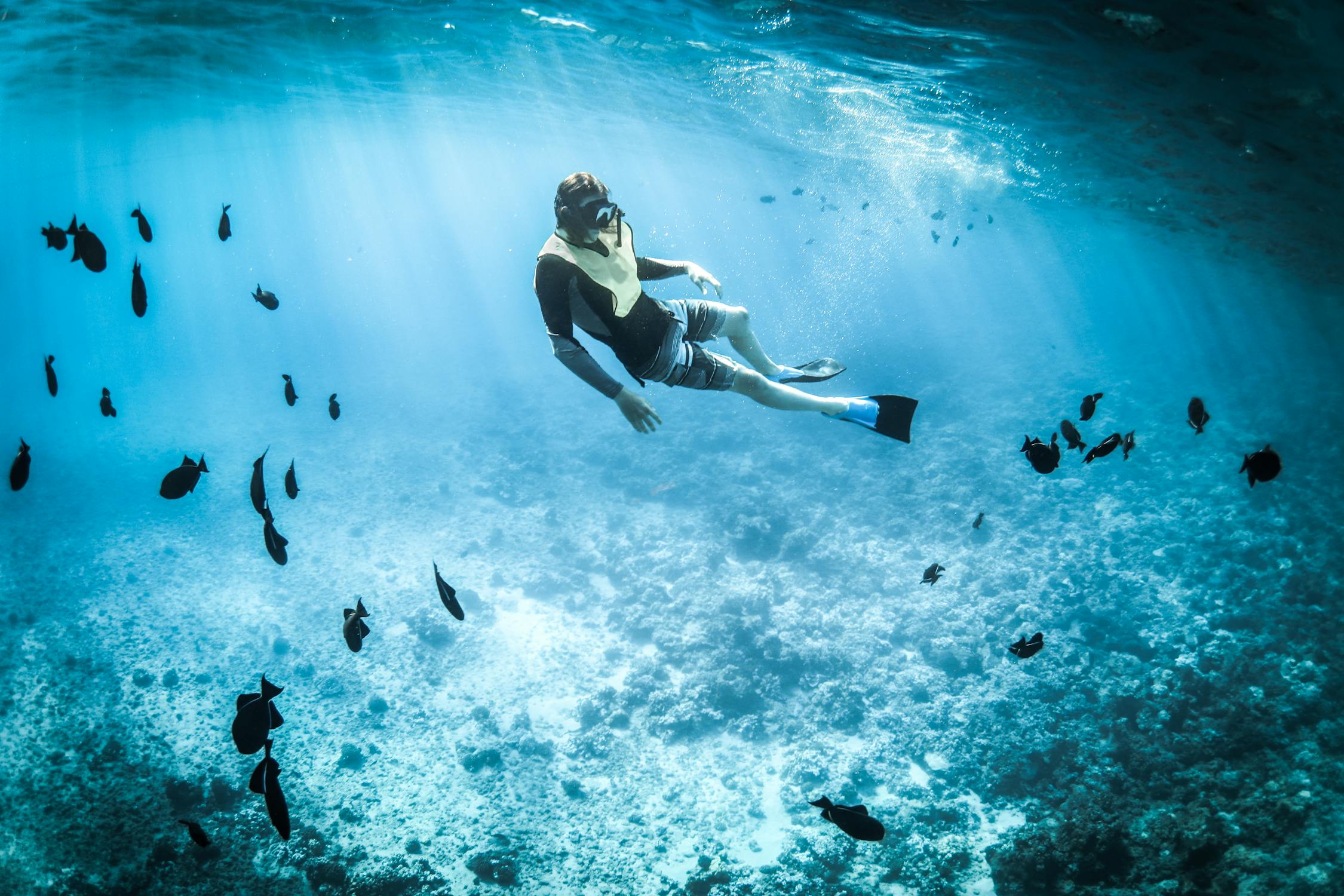 Photo by Francesco Ungaro on Pexels
3. Koh Tao, Thailand
Why It’s Perfect for Beginners: This small Thai island is one of the world’s cheapest places to learn diving, with crystal-clear waters and abundant marine life. The island cranks out thousands of new divers annually at dozens of professional dive schools.
What You’ll See: Barracuda, groupers, triggerfish, clownfish in anemones, moray eels, turtles (at the right sites), colorful soft corals.
Best Sites for Beginners:
- Japanese Gardens: Shallow (15–40 ft) coral garden with tons of reef fish
- Mango Bay: Perfect for check-out dives with sandy bottom and coral pinnacles
- White Rock: Easy pinnacle dive with abundant fish life
Season: Year-round, but March–October offers best visibility and calmest seas.
Certification: Open Water courses cost just $300–400 (including accommodation packages at some shops). Advanced Open Water adds $200–250.
Cost: 2-dive trips run $50–70. Living is cheap — eat well for $5–10/day.
Pro Tip: Choose a smaller dive school for better instructor-student ratios. Sairee Beach has most dive shops; Mae Haad is quieter.
4. Bonaire, Caribbean Netherlands
Why It’s Perfect for Beginners: Shore diving paradise. Over 60 marked shore dive sites mean you can dive independently on your own schedule. The entire coastline is a marine park with pristine reefs just steps from shore.
What You’ll See: Seahorses, frogfish, turtles (nearly guaranteed), spotted eagle rays, Caribbean reef sharks, octopuses, flamingo tongue snails.
Best Sites for Beginners:
- 1000 Steps (actually 67): Beautiful reef starting at 30 feet
- Klein Bonaire: Boat trip to deserted island with pristine reefs
- Salt Pier: Incredible pier diving with massive tarpon, horse-eye jacks
Season: Year-round. September–November brings occasional rain but fewer tourists.
Certification: Great place to learn with unlimited shore diving practice. Courses run $400–500.
Cost: Unlimited shore diving for ~$25/day (truck rental + air fills). Boat dives to Klein Bonaire $40–50.
Pro Tip: Rent a pickup truck (required for tanks and gear) for your entire stay. Start each dive by checking the reef condition marker at each site.
Intermediate Diving Destinations
These locations introduce more challenging conditions, deeper dives, currents, and more advanced marine encounters.
5. Great Barrier Reef, Australia
Why It’s Great for Intermediate Divers: The world’s largest coral reef system offers endless variety — from gentle coral gardens to dramatic wall dives, from shallow lagoons to deep pinnacles. Choose your adventure based on comfort level.
What You’ll See: Everything. Giant clams, potato cod, whitetip reef sharks, manta rays (seasonal), Maori wrasse, nudibranchs, cuttlefish, countless reef fish.
Best Sites for Intermediate Divers:
- Cod Hole: Famous for friendly potato cod interactions
- SS Yongala Wreck: One of the world’s best wreck dives (80–100 ft)
- Ribbon Reefs: Remote sites with pristine coral and pelagic action
Season: June–November offers best visibility and weather. June–July brings minke whale encounters.
Certification: Advanced Open Water recommended for deeper sites and the Yongala wreck.
Liveaboards: 3–7 day liveaboards from Cairns or Port Douglas ($800–2,500) offer the best diving.
Cost: Day boats $180–250 for 3 dives. Budget more for outer reef and premium sites.
Pro Tip: Longer liveaboards reach more remote, pristine sites. Book 6–12 months ahead for peak season.
6. Utila, Honduras
Why It’s Great for Intermediate Divers: Utila offers deeper diving than Roatán, including wall dives and drift dives with mild to moderate current. The island is famous for whale shark encounters and maintaining a chill backpacker vibe.
What You’ll See: Whale sharks (seasonal snorkeling), eagle rays, turtles, octopuses, frogfish, seahorses, large schools of jacks and snappers.
Best Sites for Intermediate Divers:
- The Maze: Complex swim-through system (60–80 ft)
- Black Coral Wall: Vertical wall dropping to 100+ feet
- Halley’s Wall: Drift dive along wall with pelagic action
Season: March–April and August–September for whale sharks. Year-round diving.
Certification: Great place for specialty courses — nitrox, deep, wreck. Courses are affordable ($150–250).
Cost: 2-tank dives $40–60. Even cheaper than Roatán with a similar laid-back Caribbean island feel.
Pro Tip: Stay in Utila Town for nightlife and restaurants. Book dives with shops that radio each other about whale shark sightings.
7. Red Sea, Egypt
Why It’s Great for Intermediate Divers: Crystal-clear water (often 100+ ft visibility), warm temperatures, and dramatic underwater topography. Shore diving from Dahab is affordable, while Sharm el-Sheikh and liveaboards offer world-class boat diving.
What You’ll See: Napoleon wrasse, oceanic whitetip sharks (offshore), manta rays, dolphins, turtles, crocodile fish, lionfish, vibrant soft corals.
Best Sites for Intermediate Divers:
- Blue Hole, Dahab: Famous shore dive (the Arch at depth is advanced — respect this one)
- Thistlegorm Wreck: WWII shipwreck in 100 feet of water
- Ras Mohammed National Park: Stunning wall dives with pelagic action
Season: March–May and September–November offer best conditions. Summer is very hot but water is warmest.
Certification: Advanced Open Water opens up more sites. Nitrox highly recommended for multiple dives per day.
Dahab: Budget shore diving paradise ($20–30 for 2 tanks including guide and transport). Liveaboards: Northern routes $600–1,000/week; southern routes to Sudan $1,500–2,500/week.
Pro Tip: Dahab offers the best value and chill vibe. Get nitrox certified before arrival to maximize bottom time.
8. Sipadan, Malaysia
Why It’s Great for Intermediate Divers: Consistently rated among the world’s top dive sites, Sipadan is an oceanic island where pelagic species cruise past walls dropping thousands of feet. Encounters with turtles, sharks, and schools of barracuda are guaranteed.
What You’ll See: Green and hawksbill turtles (dozens per dive), whitetip and grey reef sharks, hammerhead schools (season dependent), bumphead parrotfish, huge schools of barracuda and jacks.
Best Sites for Intermediate Divers:
- Barracuda Point: Massive schools of barracuda and jacks
- South Point: Strong current drift with pelagic encounters
- Turtle Cave: Famous cavern dive (for advanced/cavern certified)
Season: March–October offers best conditions. April–August brings calmest seas.
2026 Permits: Daily permits are capped at 176 divers per day (updated from the previous 120-diver limit) at a cost of 450 RM (~$95 USD) per diver per day, allowing two dives at Sipadan on that permit day. A PADI Advanced Open Water certification or equivalent is required. Book dive resorts 3–6 months ahead to secure permit allocation.
Cost: Resorts on nearby islands (Mabul, Kapalai) cost $150–300/night with diving. 3-day/2-night packages run $400–800.
Pro Tip: Stay on Mabul for macro diving when you’re not at Sipadan. Frogfish, flamboyant cuttlefish, and blue-ringed octopus reward patient observers.
Advanced Diving Destinations
These destinations demand experience, excellent buoyancy control, and comfort with challenging conditions — strong currents, deep diving, cold water, or remote locations.
9. Galápagos Islands, Ecuador
Why It’s Advanced: Cold water (65–75°F requiring 7mm wetsuits or drysuits), strong currents, deep dives, and remote locations make Galápagos challenging. But the rewards are extraordinary — hammerhead schools, whale sharks, manta rays, sea lions, and marine iguanas in one place.
What You’ll See: Hammerhead sharks (schools of hundreds), whale sharks, Galápagos sharks, silky sharks, manta rays, mola mola (sunfish), sea lions (playful underwater), marine iguanas, penguins.
Best Sites for Advanced Divers:
- Darwin and Wolf Islands: Hammerhead schools, whale sharks (June–November)
- Gordon Rocks: “The washing machine” with strong currents and pelagic action
- Punta Vicente Roca: Mola mola encounters (July–October)
Season: June–November offers best big animal action but coldest water. December–May brings warmer water and manta rays.
Certification: Advanced Open Water minimum. Nitrox highly recommended. 50+ logged dives expected.
Liveaboards: Only way to reach Darwin and Wolf. 7-night trips cost $4,000–6,000 plus Galápagos park fees ($100–200).
Pro Tip: Get comfortable with cold water and currents before booking. This is bucket-list diving but physically demanding.
10. Blue Corner, Palau
Why It’s Advanced: Strong currents require using reef hooks to hold position while massive schools of fish and sharks cruise past. This drift dive along a vertical wall is thrilling and challenging.
What You’ll See: Grey reef sharks (dozens), whitetip sharks, schools of barracuda, jacks, snappers, turtles, manta rays (seasonal), Napoleon wrasse, bumphead parrotfish.
Season: November–May offers best visibility and calmest seas. Year-round diving is excellent.
Certification: Advanced Open Water required for most Palau sites. Comfort with strong currents essential.
Liveaboards: 6–10 day liveaboards ($2,500–4,500) reach remote sites. Land-based diving from Koror is also excellent.
Cost: Daily boat diving from Koror runs $150–200 for 3 tanks. Palau has environmental fees (~$50–100).
Pro Tip: Bring a reef hook. Master the technique in mild current before attempting Blue Corner.
Photo by Francesco Ungaro on Pexels
11. Cenotes, Mexico
Why It’s Advanced: Cavern and cave diving in crystal-clear freshwater sinkholes requires specialized training. The otherworldly light beams and formations are worth the training investment.
What You’ll See: Haloclines (where fresh and salt water meet), stalactites, stalagmites, light beams, fossils, incredible visibility (200+ feet), unique geological formations.
Best Cenotes:
- Dos Ojos: Famous for light beams and the Bat Cave
- Angelita: Advanced deep dive with hydrogen sulfide cloud at 100 feet
- The Pit: Deep cenote dive (130+ feet) with light shaft
Certification: Cavern certification minimum (can be earned in Tulum/Playa del Carmen in 2 days, $350–450). Full Cave certification for deeper penetration.
Season: Year-round. Water temperature constant at 77°F. Summer brings more tourists to the area.
Cost: 2-cenote dive trips $150–200 for certified cavern divers. Cavern course $350–450 over 2–3 days.
Pro Tip: Perfect buoyancy is critical — disturbing sediment ruins visibility. Get very comfortable in open water before attempting cenote diving.
12. Great Blue Hole, Belize
Why It’s Advanced: This 407-foot-deep sinkhole requires descending to 130+ feet to see the stalactites and cave formations. Nitrogen narcosis, dark depths, and decompression considerations make this a serious dive.
What You’ll See: Ancient stalactites at depth, Caribbean reef sharks, massive opening from above, unique geological formations.
Season: Year-round diving. April–June offers best conditions and whale shark potential.
Certification: Advanced Open Water minimum. Deep Diver specialty recommended. Many operators require 24+ logged dives.
Liveaboards: Most visitors combine the Blue Hole with other excellent Belize diving on 4–7 day liveaboards ($1,200–2,500).
Cost: Day trips from Ambergris Caye run $250–350. Long boat ride (2+ hours each way) but iconic bucket list dive.
Pro Tip: The surrounding Belize diving (Lighthouse Reef, Half Moon Caye) often exceeds the Blue Hole itself. Don’t skip these sites.
Specialty and Unique Diving
13. Socorro Islands (Revillagigedo), Mexico
Why It’s Special: Giant Pacific manta ray encounters — these curious creatures approach divers for interaction. Also dolphins, humpback whales (season), multiple shark species, and excellent visibility.
Difficulty: Advanced. Long liveaboard journey, deep dives, strong currents. 100+ dives recommended.
Season: November–May only (too rough other months). January–April for humpback whales.
Cost: 8–10 day liveaboards $2,500–4,500 from Cabo San Lucas.
14. Cocos Island, Costa Rica
Why It’s Special: Hammerhead schools, whale sharks, manta rays, tiger sharks, Galápagos sharks. One of the world’s best big animal destinations.
Difficulty: Advanced. Strong currents, deep dives, remote location. 50+ dives minimum.
Season: June–November for whale sharks; hammerheads year-round.
Cost: 10-day liveaboards $4,500–6,500 from Puntarenas.
15. Raja Ampat, Indonesia
Why It’s Special: The world’s highest marine biodiversity. See more species on one dive than most places have in entire regions.
Difficulty: Intermediate to advanced depending on sites. Some areas have strong currents.
Season: October–April (dry season, best visibility). November–March ideal.
2026 Permit Fees: International visitors now pay IDR 1,000,000 (~$63 USD) for the Marine Park entry fee plus IDR 300,000 for a Visitor Entry Ticket (tourism infrastructure tax). All visitors must pre-register through the SIPARI (Sistem Informasi Pariwisata Raja Ampat) online system before arrival — budget time for this step in your trip planning.
Cost: 7–10 day liveaboards $2,500–4,500 from Sorong. Swan Hellenic launched dedicated SCUBA programs in 2026 with sailings departing Sorong; prices from $7,925 for expedition-style access.
Diving Safety and Trip Planning
Certification Levels:
- Open Water: 60 feet maximum, no overhead environments
- Advanced Open Water: 100 feet, opens up more sites worldwide
- Specialty Certifications: Deep, wreck, nitrox, cavern, drift, etc.
Health Considerations:
- Get a dive medical before expensive trips
- Purchase DAN (Divers Alert Network) insurance
- Allow 18–24 hours surface interval before flying
- Stay hydrated and avoid alcohol before diving
Gear:
- Rent locally for destinations with weight considerations
- Bring your own mask, computer, regulator if possible
- Wetsuit thickness: Caribbean/tropical (3mm), temperate (5mm), cold water (7mm or drysuit)
Logbook: Maintain detailed logs. Many advanced destinations require proof of experience.
Environmental Responsibility:
- Never touch coral or marine life
- Perfect your buoyancy to avoid reef damage
- Don’t feed fish or alter animal behavior
- Choose reef-safe sunscreen
For trip financial planning, our adventure travel insurance guide covers dive-specific emergency evacuation policies — DAN membership alone does not cover all evacuation costs from remote sites like Cocos Island or Raja Ampat. For snorkeling as a complement to your diving itinerary, see our best snorkeling destinations guide.
Best Times to Dive
Caribbean: Year-round, best visibility November–June Red Sea: March–November, avoid summer heat if sensitive Southeast Asia: November–April (dry season) Galápagos: June–November for big animals, cold water Great Barrier Reef: June–October for best conditions Palau: November–May for optimal visibility
Whether you’re just getting certified or planning your 500th dive, the underwater world offers endless discovery. Start with beginner-friendly destinations to build skills and confidence, progress to intermediate sites as you gain experience, and eventually tackle the advanced destinations that offer the planet’s most thrilling diving encounters. Our adventure travel safety guide covers pre-trip preparation that applies directly to dive travel.
The ocean is calling — it’s time to answer.
Recommended Gear for Dive Travel
Two items that improve every dive trip: the GoPro HERO13 Black is waterproof to 33 ft without any housing — snap it to a wrist mount or tether it to your BCD for wide-angle footage on reef dives, manta encounters, and wreck penetrations in the 5-30m range. For deeper dives requiring a housing, and for an alternative option comparison, our best action cameras for adventure roundup covers waterproof performance across major models. The Earth Pak Waterproof Dry Bag (Wirecutter pick) keeps your camera, wallet, and dry clothes protected on boat transfers and surface intervals — essential on live-aboard trips where your kit lives on deck between dives.
 GoPro and dry bag — dive trip essentials — Photo on Pexels
Related Reading
Get the best ThrillStays tips in your inbox
Weekly guides, deals, and insider tips. No spam, unsubscribe anytime.