Best Portable Water Filters for Expedition Travel 2026
Explore the top expedition-ready portable water filters of 2026, from ultralight personal squeezes to high-volume group purifiers, and learn which tech beats viruses in the field.

This post may contain affiliate links. Disclosure
Backcountry explorers know that the line between a successful summit and a forced retreat can be as thin as a water source. In 2026, the market offers a spectrum of portable filtration and purification systems that balance weight, flow, and pathogen protection. Whether you’re carving a ski line in the Himalayas, overlanding across the Sahara, or setting a base camp in the Patagonian Andes, choosing the right gear means understanding virus-removal versus filter-only technology, group size, and how long you’ll be in the field. Below we break down the science, the market trends, and the six vetted systems that survived the rigorous testing of climbers, militaries, and humanitarian crews.
Short answer: The filter-versus-purifier decision comes down to viruses. Filters handle bacteria and protozoa such as Giardia and Cryptosporidium, which covers most North American backcountry water. Purifiers add the virus protection needed across much of the world, where the WHO reports 1.7 billion people rely on faecally contaminated water.
Why Virus Removal Matters on Global Expeditions
The World Health Organization reports that 2.2 billion people lack access to safely managed drinking water, and 1.7 billion rely on water contaminated with feces. That contamination fuels roughly 505,000 diarrheal deaths each year. While bacteria and protozoa (Giardia, Cryptosporidium) are the usual suspects for North American backcountry streams, many regions of South Asia, Central Africa, and post-disaster zones harbor waterborne viruses such as norovirus and hepatitis A.
A filter with a pore size of 0.3 microns or larger will snag bacteria and protozoa but fails to block viruses, which can be as small as 0.02 microns. The CDC’s water-treatment guidance stresses that combination treatment (filter + chemical, UV, or boiling) is required for full-spectrum protection. For expedition teams that can’t rely on a stove at altitude, a purifier — a device that both filters and inactivates viruses — becomes a non-negotiable lifeline.
Understanding this decision fork early lets you allocate pack weight wisely, avoid last-minute improvisation, and keep your crew healthy when you’re miles from the nearest clinic.
Filter vs. Purifier: The Decision Fork for Adventurers
| Feature | Typical Filter (>=0.2 um) | Purifier (<=0.02 um) |
|---|---|---|
| Removes bacteria and protozoa | Yes | Yes |
| Removes viruses | No (needs chemical/UV) | Yes |
| Flow rate (liters/min) | 1-2.5 (varies) | 0.5-2.5 |
| Weight | 3 oz - 20 oz | 11 oz - 17 oz |
| Lifetime (liters) | 1,500 - 50,000 | 10,000 - 18,000 |
| Maintenance | Back-flush or scrub | Self-cleaning or back-flush |
| Ideal terrain | Alpine streams, glacial melt (low viral risk) | Developing-world rivers, disaster zones, high-altitude lakes with viral risk |
If your itinerary stays within U.S., Canada, or Western Europe where viral contamination is rare, a high-flow filter like the MSR Trail Base or Platypus GravityWorks will keep you moving. When you cross into viral hot-spots — think the Ganges, Congo basin, or post-earthquake shelters — choose a purifier such as the MSR Guardian or LifeStraw Mission.
The skill ladder also matters. Novice trekkers often start with a personal squeeze filter for simplicity, while seasoned overlanders and expedition leaders gravitate toward modular gravity systems that can serve a whole crew at base camp.
Top Expedition Water Filters of 2026
Below are the six products that passed our expedition-grade vetting. Each entry includes weight, flow, lifetime, and a quick “best-for” note so you can match the kit to your mission profile.
MSR Guardian Water Purifier — Pump
- ASIN: B0DB3RDN9H
- Buy: Amazon link
- Price: $380-$400
- Specs: 17.3 oz; 0.02-micron hollow-fiber membrane; 2.5 L/min flow; 10,000-liter lifetime; self-cleaning on every stroke; meets NSF Protocol P248 (US military)
- Best for: International expeditions where virus-contaminated water is a real risk.
- Pros: Removes viruses, bacteria, protozoa, and particulate in a single pump pass; self-cleaning eliminates back-flushing; survives freezing, drops, and field abuse.
- Cons: Heaviest pump filter in this roundup; premium price (~$400).
Why it shines: The Guardian’s 0.02 um pore meets the stringent Wilderness Medical Society guideline for virus removal without chemicals. Its self-cleaning piston reduces the maintenance load on long-duration teams, a feature praised by military units and humanitarian NGOs. See the official MSR Guardian product page for full certification documentation.
Katadyn Pocket Water Filter — Standard
- ASIN: B000RZEJPU
- Buy: Amazon link
- Price: $380-$430
- Specs: 20 oz; 0.2-micron silver-impregnated ceramic element; 1 L/min flow; 50,000-liter lifetime; 20-year warranty; includes pre-filter and bottle clip.
- Best for: Long-duration expeditions and professional use where ceramic durability outweighs weight.
- Pros: Highest lifetime capacity (50,000 L); field-cleanable with a scrub pad; trusted by militaries and relief groups for over 30 years.
- Cons: Does not remove viruses — add chemical treatment for developing-world use; heaviest filter at 20 oz.
Field tip: The ceramic element can be scrubbed on the go, restoring flow without spare cartridges — a boon for multi-week treks where resupply is impossible. Details at the Katadyn Pocket official product page.
MSR Trail Base Water Filter Kit — 4-Liter
- ASIN: B09MBF7SFN
- Buy: Amazon link
- Price: $160-$170
- Specs: 1 lb 3.6 oz total; 0.2-micron hollow fiber; 1 L/min flow; 1,500-liter cartridge; dual 4 L reservoirs; converts between gravity base-camp system and handheld pump.
- Best for: Multi-day base camp expeditions needing high-volume water and a compact day-hike filter.
- Pros: Modular design covers both gravity and pump use; 8 L total storage for group hydration; NSF Protocol P231 certified for bacteria and protozoa.
- Cons: No virus removal; gravity flow slows if hose isn’t near-vertical.
Strategic use: Set up the gravity side at camp while a teammate uses the handheld pump on a side-trip, keeping the whole crew hydrated without extra gear.
Platypus GravityWorks Water Filter System — 4-Liter
- ASIN: B0DB3S6NNZ
- Buy: Amazon link
- Price: $100-$135
- Specs: 11.5 oz; 0.2-micron hollow fiber; 1.75 L/min rated flow (4 L in approximately 2 min 15 sec); 1,500-liter cartridge; one 4 L dirty bag, one 4 L clean bag.
- Best for: Small-group backcountry camps (3-5 people) craving the fastest hands-free gravity filtration.
- Pros: Fastest gravity filter tested; lightest full-kit gravity system; hands-free hang-and-wait design.
- Cons: No virus removal; bags can clog quickly in silted or glacial meltwater — pre-filter turbid sources first.
Pro tip: Pair the GravityWorks with a light pre-filter sock (commercially available) to keep the 0.2 um membrane clean in alpine streams with fine sand.
Sawyer Products Squeeze Water Filtration System — SP131
- ASIN: B0988M1RTF
- Buy: Amazon link
- Price: $40-$50
- Specs: 3 oz filter only; 0.1-micron absolute hollow fiber; removes 99.99999% bacteria, 99.9999% protozoa, 100% microplastics; million-gallon rated capacity; back-flushable; includes one 16-oz and two 32-oz squeeze pouches.
- Best for: Individual expedition members needing an ultralight personal filter that can double as an inline or gravity filter with a CNOC bladder.
- Pros: Lightest filter by far; essentially never needs replacement; versatile threading fits standard bottles and can be adapted for inline or gravity use.
- Cons: No virus removal — combine with a purification tablet for international use; squeeze pouches can crack under prolonged hard use.
Adventure hack: Slip the Squeeze into a hydration bladder and use the included pouches as emergency “water bottles” for summit pushes where every gram counts.
LifeStraw Mission High-Volume Gravity-Fed Water Purifier — 12-Liter
- ASIN: B00XWAP2SU
- Buy: Amazon link
- Price: $120-$145
- Specs: 16 oz; 0.02-micron ultrafilter membrane; removes viruses (99.999%), bacteria (99.9999%), protozoa (99.99%); 9-12 L/hr gravity flow; 18,000-liter lifetime; 12-liter reservoir.
- Best for: Base camps in developing-world or post-disaster environments where viral purification for a group of 8+ is non-negotiable.
- Pros: One of the only gravity purifiers that removes viruses without chemicals; lowest cost-per-liter in the roundup; no moving parts, batteries, or chemicals — just hang and let gravity work.
- Cons: Slow flow (approximately 5 min per liter) makes it impractical for on-the-go hydration; complex back-flush procedure; short clean-water hose creates ergonomic awkwardness.
Real-world note: Humanitarian NGOs deploy the Mission in refugee camps because it delivers virus-level safety without relying on power or consumables. See the official LifeStraw Mission page for field deployment data.
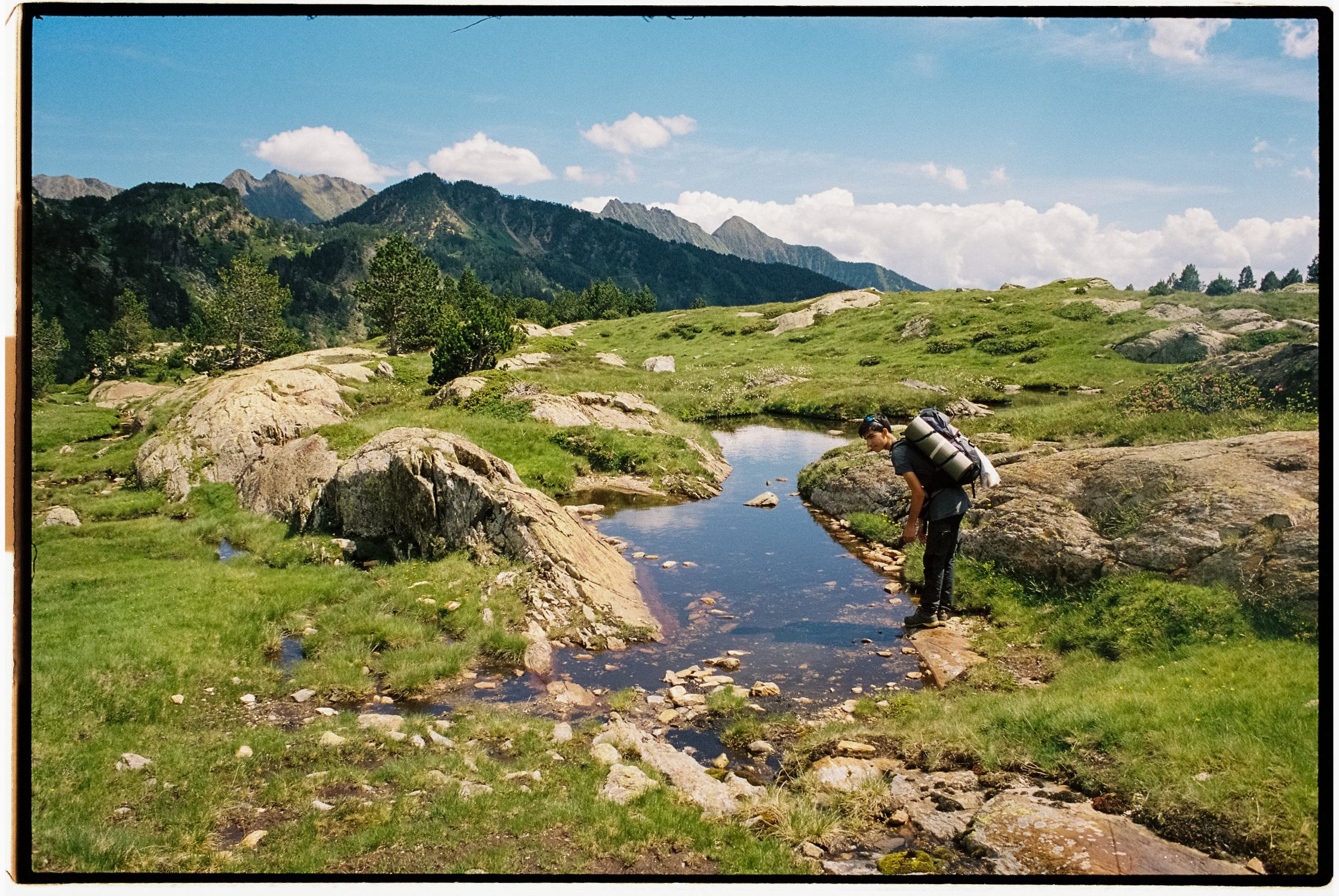
Matching Filters to Skill Ladder and Group Size
| Skill Level | Typical Group | Water Source Risk | Recommended Gear |
|---|---|---|---|
| Novice Day-Hiker (solo) | 1 | Low (U.S./Canada alpine streams) | Sawyer Squeeze (ultralight) |
| Intermediate Trekker (2-4) | 2-4 | Moderate (mixed alpine and low-altitude rivers) | Platypus GravityWorks + optional chemical tablets |
| Advanced Overlander (5-8) | 5-8 | High (cross-border rivers, variable quality) | MSR Trail Base + backup Sawyer Squeeze |
| Expedition Leader (10+) | 10+ | Very High (viral hotspots, disaster zones) | MSR Guardian (personal) + LifeStraw Mission (base camp) |
| Professional / Military | 10+ | Extreme (unknown source, potential bio-hazard) | Katadyn Pocket (durable ceramic) + MSR Guardian for virus protection |
The skill ladder concept respects that seasoned teams can manage more complex systems (gravity-to-pump conversions, back-flushing) while newcomers benefit from plug-and-play simplicity. Weight budgeting also shifts: a soloist can spare 3 oz for a squeeze filter, whereas a 12-person base camp can allocate 16 oz per person for a high-capacity purifier without compromising overall pack weight.

Field Maintenance, Back-Flushing, and Longevity Tips
- Pre-filter Turbid Water — Use a simple mesh sock or a coffee filter to strip sand and silt before it reaches the membrane. This extends cartridge life, especially for the Platypus GravityWorks and MSR Trail Base where clogged hoses can halve flow rates.
- Back-Flush Regularly — For hollow-fiber systems (Sawyer, MSR, Platypus), reverse the flow with clean water every 2-3 L or after each use in dirty water. The MSR Guardian self-cleans on every stroke, but a manual flush after a full tank of murky water still helps.
- Ceramic Scrub for Katadyn — The silver-impregnated ceramic element can be brushed with a soft pad and rinsed. Avoid abrasive tools; the ceramic is fragile but can last 50,000 L when cared for.
- LifeStraw Mission Back-Flush — Follow the official LifeStraw Mission guide: disassemble the filter housing, run clean water through the reverse port, and re-assemble. The procedure is slower but essential after filtering high-turbidity water.
- Store Dry and Cool — All membranes degrade faster in heat and humidity. Pack filters in a dry zip-lock bag with a silica packet, especially when traveling through tropical climates.
Regular maintenance not only preserves flow but also ensures that the NSF certifications (P248 for Guardian, P231 for Trail Base) remain valid throughout the filter’s advertised lifetime. The American Hiking Society’s backcountry water purification guide has additional field-care tips worth bookmarking before any major expedition.
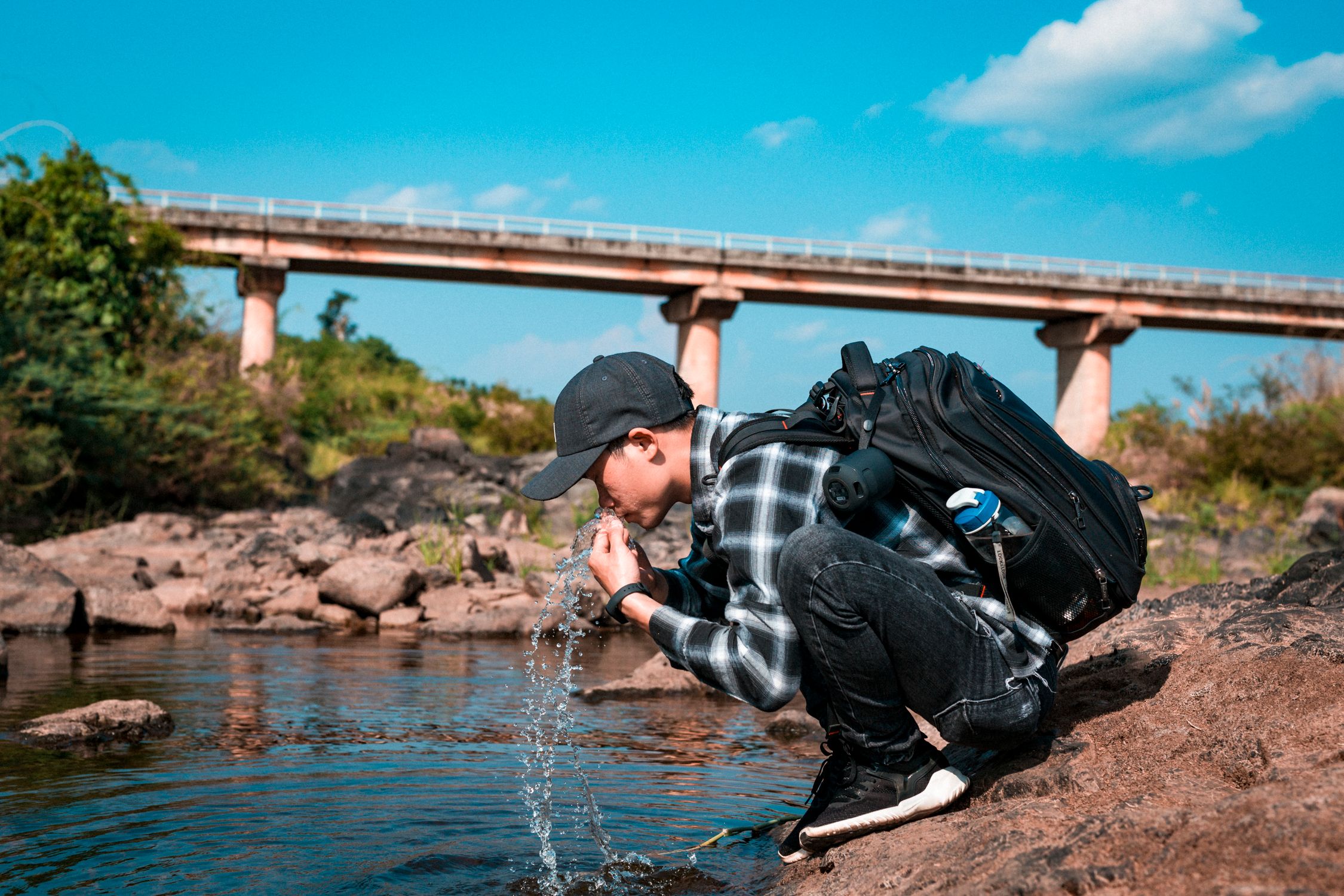
Cost-per-Liter and Market Trends in 2026
The portable water filter market was valued at USD 2.5 billion in 2024 and is projected to hit USD 4.8 billion by 2033, growing at a 7.6% CAGR. This surge mirrors the record 167 million U.S. adults engaging in wilderness activities in 2025.
When budgeting, consider cost-per-liter (CPL) rather than just upfront price. Here’s a quick snapshot:
| Product | Approx. Price | Lifetime (L) | CPL (USD/L) |
|---|---|---|---|
| Sawyer Squeeze | $45 | 1,000,000 (million-gallon rating) | $0.000045 |
| Platypus GravityWorks | $118 | 1,500 | $0.079 |
| MSR Trail Base | $165 | 1,500 | $0.110 |
| Katadyn Pocket | $405 | 50,000 | $0.008 |
| LifeStraw Mission | $133 | 18,000 | $0.007 |
| MSR Guardian | $390 | 10,000 | $0.039 |
While the Sawyer Squeeze boasts an astronomically low CPL, its lack of virus protection limits its use in high-risk regions. The LifeStraw Mission and Katadyn Pocket deliver the best CPL for groups needing virus removal or ultra-long durability. The MSR Guardian, though pricier per liter, offers the peace of mind of military-grade purification — a worthwhile trade for elite expeditions where a single contaminated sip could jeopardize the mission.
Final Recommendation
For expedition teams that span the globe, we recommend a tiered approach:
- Personal Primary Filter — Sawyer Squeeze for ultralight solo use, paired with chemical tablets when traveling to viral zones.
- Group Base-Camp Purifier — LifeStraw Mission for camps of 8+ in developing-world or disaster environments, delivering virus-level safety without power.
- Backup/Secondary System — MSR Guardian for leaders who need a rugged, self-cleaning purifier that can handle any source, from alpine melt to stagnant river water.
Add a Platypus GravityWorks or MSR Trail Base for rapid daytime hydration, and keep a Katadyn Pocket in the kit for ultra-long missions where cartridge replacement is impossible. This combination covers all pathogen classes, scales with group size, and balances weight vs. flow for every leg of the journey.
Remember, boiling remains the only universally effective method — a minute rolling boil at sea level, three minutes above 6,500 ft — so always carry a lightweight stove or metal pot as a backup. With the right gear, you’ll turn every mountain stream into a reliable water source, keeping your crew moving, healthy, and focused on the summit.
Related Reading
Get price-drop alerts and new guides from BoldTripGuide
One email a week: price drops on the gear we recommend, new guides, and what changed. No spam, unsubscribe anytime.