Best Climbing Helmets for Trad & Multipitch in 2026
Explore the top trad and multipitch climbing helmets of 2026, from ultra-light Petzl Sirocco to MIPS-protected Mammut Wall Rider, with specs, pros, cons, and buying links.

This post may contain affiliate links. Disclosure
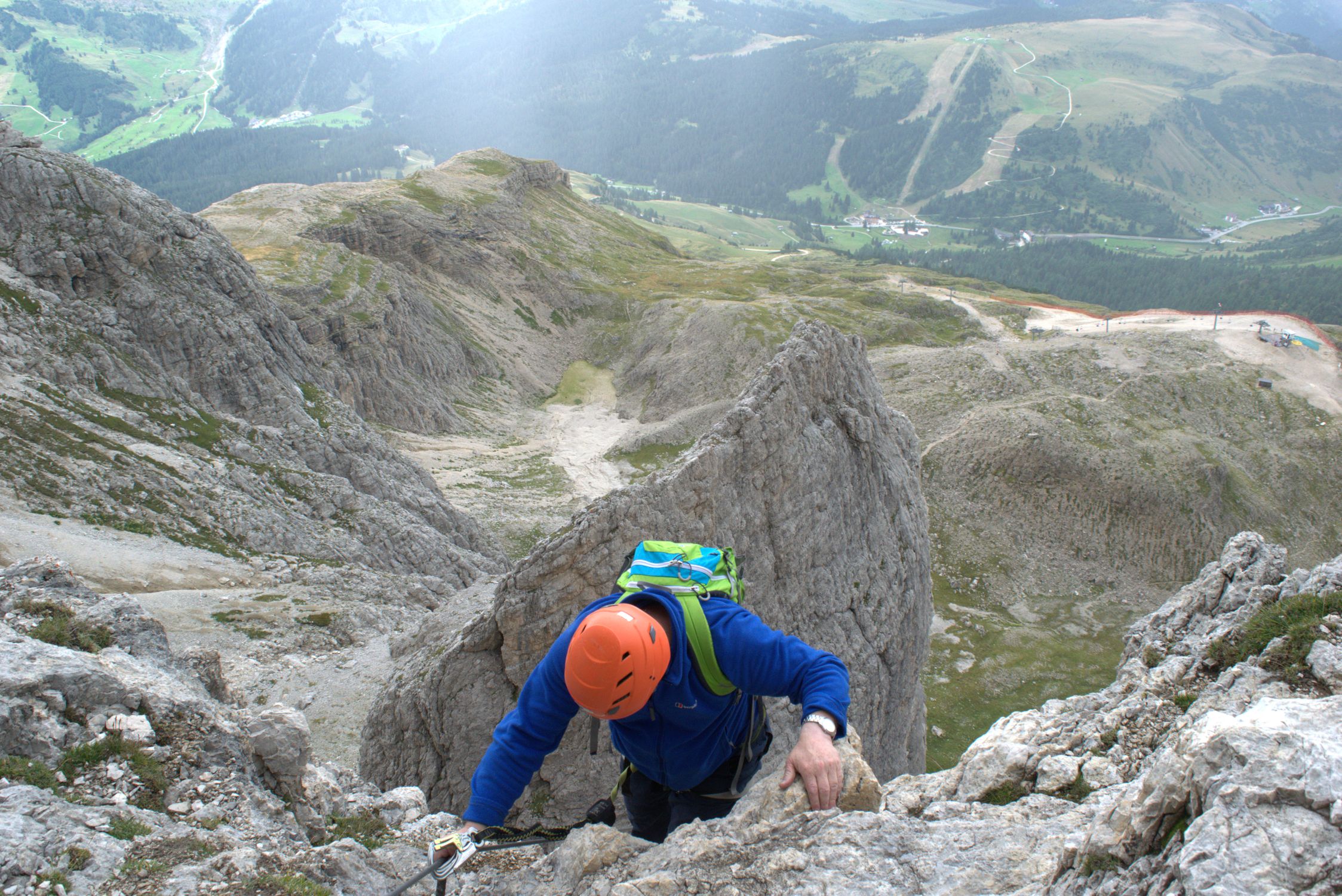
The trad and multipitch arena is where every gram, vent, and impact-mitigation technology is measured against hours of exposure on a single piece of rock. In 2026 the market offers a surprisingly diverse set of lids that balance feather-light foam, hard-shell durability, and the newest rotational-impact systems — all while staying EN 12492 and UIAA certified. Whether you’re hauling a rack up a remote alpine wall or leading a ten-pitch granite line in summer heat, the right helmet can mean the difference between a comfortable day on the rock and a fatigue-laden descent. Below we break down the science, the specs, and the real-world trade-offs so you can match a helmet to your route profile, climate, and budget.
Short answer: On long trad and multipitch days, foam type drives both weight and impact behaviour. EPP gives the Petzl Sirocco a class-leading 170 g in a hybrid EPP-EPS sandwich, while EPS handles single hard impacts at lower cost. Add MIPS for rotational protection on big walls, and weigh ventilation as heavily as grams.
Why Weight and Foam Construction Matter on Long Trad Days
Traditional climbing demands a helmet that stays on for hours, often in variable weather. Foam type drives both weight and impact behavior. EPP (Expanded Polypropylene) is renowned for its resilience and low density, giving helmets like the Petzl Sirocco a class-leading 170 g weight while still offering a hybrid EPP-EPS sandwich for top-down protection. EPS (Expanded Polystyrene), used in the Petzl Meteor and Edelrid Zodiac, provides excellent energy absorption but adds a few grams. Hybrid constructions (EPS + ABS, or EPS + polycarbonate) aim to blend durability with modest weight, as seen in the Edelrid Zodiac.
On a 12-pitch trad ascent, each gram saved reduces neck fatigue, especially when the headband sits low and the helmet’s rear profile extends over the occiput. The Sirocco’s low rear profile and adjustable headband are engineered for that exact scenario. Conversely, a heavier shell like the Petzl Boreo (330 g) trades weight for bomb-proof durability — useful for guiding clients who may mishandle gear but less ideal for elite alpinists chasing weight savings.
Ventilation and Comfort on Multi-Pitch Climbs
Multipitch routes often involve long approaches, belay-station waits, and exposure to sun or wind. Ventilation becomes a performance metric. The Black Diamond Vapor boasts massive side openings that deliver the best airflow of any helmet tested, making it a go-to for hot desert trad routes. The Petzl Sirocco follows with a 12-vent system that balances airflow with protection, while the Mammut Wall Rider and Edelrid Zodiac provide generous but more modest vent patterns.
For climbers who switch between rock and ski-mountaineering, the Petzl Meteor offers ski-goggle compatibility — a practical feature when you transition from a winter ascent to a summer trad crag without swapping helmets. However, its ventilation trails behind the Vapor and Sirocco, so expect a bit more warmth on a scorching midday push.
Safety Certifications You Can Trust
All helmets in this roundup carry EN 12492 and UIAA certifications, the two primary safety standards for climbing headgear. Both require the helmet to transmit no more than 10 kN of force in a vertical drop test, ensuring a baseline level of impact protection. For a deeper dive into certification nuances, see the Understanding Climbing Helmet Certifications guide from WeighMyRack. The OutdoorGearLab buying-advice article also outlines how to weigh weight, ventilation, and protection when choosing a lid: How to Choose a Climbing Helmet.
MIPS Technology for Big-Wall Leaders
Rotational forces are a hidden danger on big-wall routes where a rockfall can strike at an angle. MIPS (Multi-directional Impact Protection System) mitigates those forces by allowing the helmet’s liner to rotate slightly on impact. The Mammut Wall Rider MIPS was the first climbing helmet to integrate this technology, delivering rotational protection at a modest 225 g weight — lighter than many non-MIPS in-mold helmets. While the MIPS liner can feel warm during sustained summer climbs, the safety payoff on exposed alpine big walls often justifies the extra $30-40 price tag.
Budget vs. Premium Choices for the Trad Community
With climbing participation up 30% since 2019 and 70% of outdoor climbers hitting trad at least once a year, the market now spans entry-level to elite performance. The Edelrid Zodiac and Petzl Boreo sit at the budget-friendly end, offering solid side-impact protection and durable shells for under $95 and $70 respectively. At the premium end, the Petzl Sirocco commands $165-$175 but rewards you with the lightest weight in its class and a top pick in OutdoorGearLab’s 2025 review. The Gyms and Trends 2025 report from Climbing Business Journal confirms over 900 climbing gyms now feed a pipeline of trad-ready athletes — and that pipeline is driving real demand for performance helmets.
Below is the curated list of helmets that excel on long trad and multipitch routes. Each entry includes specs, real-world pros and cons, and a direct Amazon link with our affiliate tag.
Top Picks for Trad and Multipitch
Petzl Sirocco — Medium/Large, White
- Amazon: Buy Petzl Sirocco (ASIN B0D1GT2VWF)
- Price: $165-$175
- Weight: 170 g (6 oz) — lightest in its class
- Construction: Hybrid EPP lateral foam + EPS top foam under polycarbonate crown
- Ventilation: 12 vents, low rear profile for occiput coverage
- Size: 53-61 cm (Medium/Large)
- Best For: All-day trad and multipitch climbers who prioritize minimal weight without sacrificing full-head coverage
- Pros:
- Feather-light 170 g weight reduces neck fatigue on long routes
- 12-vent system delivers strong airflow on sustained pitches
- Low rear profile extends protection down the occiput for rockfall from above
- Highly adjustable headband fits a wide range of head shapes
- Cons:
- Exposed EPP foam scratches and scuffs more easily than hard-shell alternatives
- Premium price point is the highest among foam-dominant trad lids

Black Diamond Vapor — Medium/Large, Steel Grey
- Amazon: Buy Black Diamond Vapor (ASIN B01D4W0BTK)
- Price: $175-$185
- Weight: 180 g (6.35 oz) in M/L
- Construction: Co-molded EPP foam sides + ALUULA composite under polycarbonate crown
- Ventilation: Massive side openings, best-in-class airflow
- Size: 56-63 cm
- Best For: Trad leaders who run hot and need maximum airflow on long routes in warm conditions
- Pros:
- Unmatched ventilation keeps the head cool on hot crags
- Ultralight two-piece construction shaves weight vs. conventional in-mold designs
- Ratchet suspension tucks inside for compact pack storage on approaches
- Removable headlamp clips included for alpine starts on multipitch
- Cons:
- Minimal side coverage leaves more head exposed vs. deeper-cut foam helmets
- Fit skews toward oval head shapes; round-headed climbers may find gaps
Mammut Wall Rider — Vibrant Orange, 52-57 cm
- Amazon: Buy Mammut Wall Rider (ASIN B0BDMM16FB)
- Price: $100-$120
- Weight: 220 g
- Construction: EPP foam with reinforced hard-shell overlay
- Ventilation: Generous openings, balanced airflow
- Size: 52-61 cm
- Best For: Trad climbers who want near-ultralight foam protection with more durability than exposed-foam lids
- Pros:
- 220 g is exceptionally light for a foam helmet with a reinforced outer shell
- Minimalist adjustment system sits low, reducing leverage-induced neck fatigue on long routes
- Two headlamp clips + elastic strap handle a full-size alpinist headlamp without slipping
- Hard-shell reinforcement resists surface abrasion during chimney and off-width climbing
- Cons:
- Adjustment dial less intuitive than competitor ratchet systems mid-route
- Color options more limited than Petzl lineup
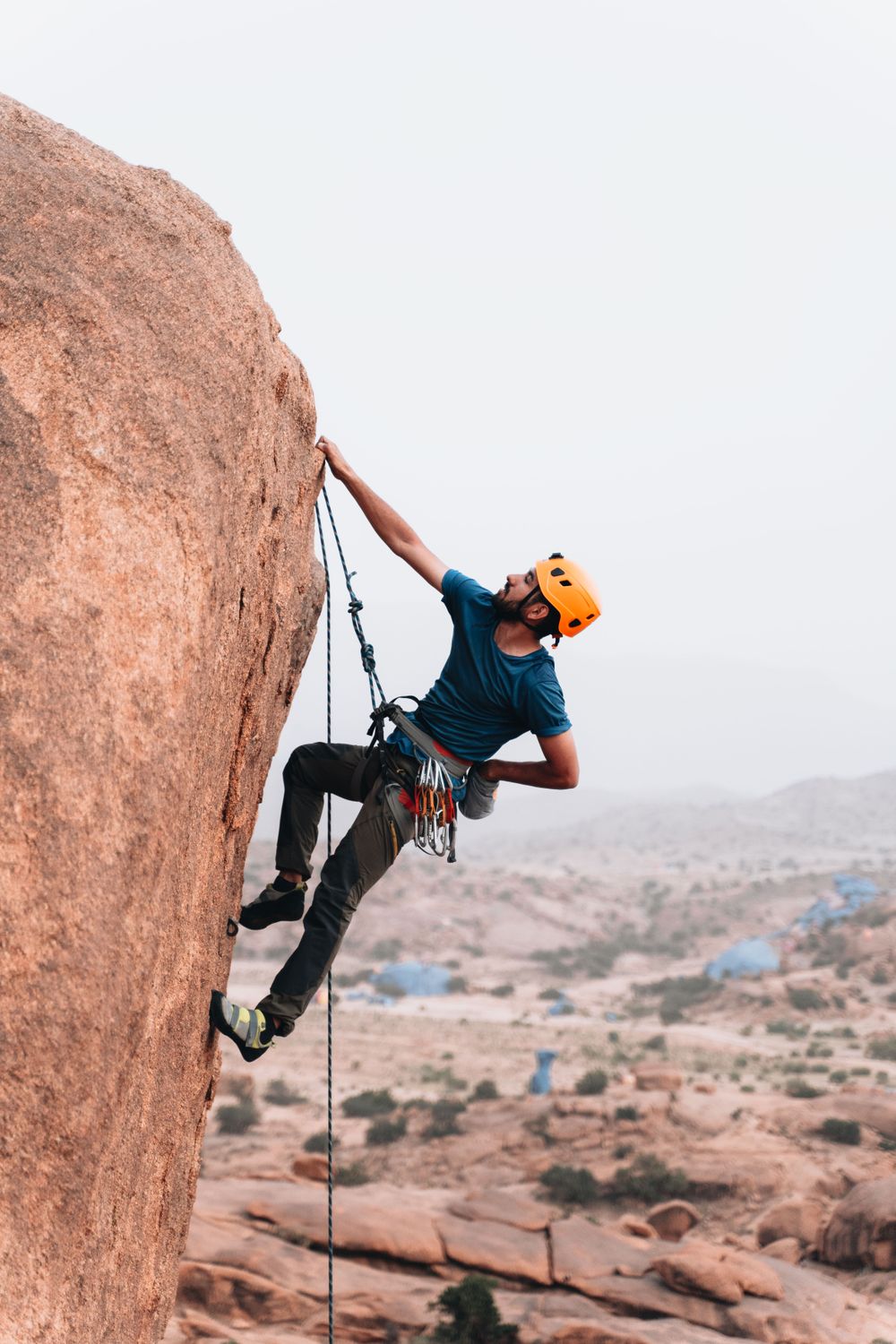
Petzl Meteor — Medium/Large
- Amazon: Buy Petzl Meteor (ASIN B07MZ4LRR8)
- Price: $85-$100
- Weight: 240 g in M/L
- Construction: In-mold EPS foam inside polycarbonate shell (TOP and SIDE PROTECTION certified)
- Ventilation: Moderate; trails the Vapor and Sirocco on warm days
- Size: Medium/Large
- Best For: Multipitch climbers who also ski tour in winter and want one helmet for both disciplines
- Pros:
- Ski-goggle-compatible design bridges trad climbing and ski mountaineering season
- In-mold construction is noticeably more durable than exposed-foam competitors
- Enhanced side protection exceeds EN 12492 baseline, ideal for off-width and chimney climbing
- Best price-to-protection ratio in the trad-capable lightweight category
- Cons:
- 70 g heavier than the Sirocco — noticeable on a long alpine day
- Ventilation trails the Vapor and Sirocco on warm cragging days
Edelrid Zodiac — Icemint, One Size
- Amazon: Buy Edelrid Zodiac (ASIN B07C4MBPXN)
- Price: $75-$95
- Weight: 235 g
- Construction: Hybrid EPS inner shell + ABS outer shell, deep-drawn for enhanced side impact protection
- Ventilation: Standard openings, adequate for moderate climates
- Size: One size (52-58 cm) with 6 cm adjustment range
- Best For: Budget-conscious trad climbers who want hybrid construction durability at entry-level pricing
- Pros:
- EPS + ABS hybrid delivers best-in-class side-impact protection at this price point
- Deep-drawn shell wraps lower around the temples than single-shell helmets
- Excellent headlamp attachment system with two front clips and rear elastic
- One-size-fits-most simplifies group gear sharing on trips
- Cons:
- One-size design may not suit very small (under 52 cm) or large (over 58 cm) heads
- ABS outer shell adds slight weight vs. polycarbonate alternatives
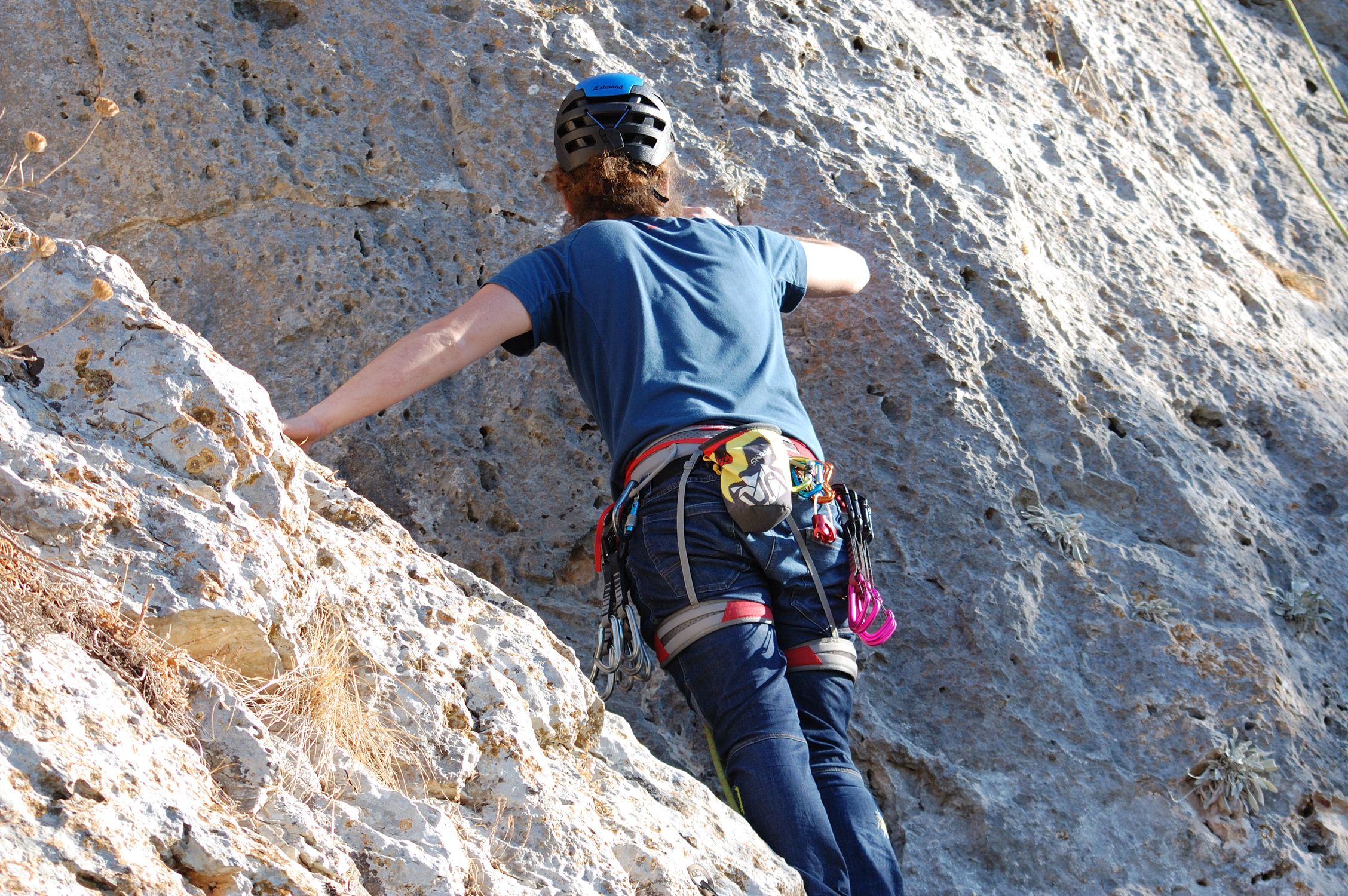
Mammut Wall Rider MIPS — Lightweight Climbing Helmet
- Amazon: Buy Mammut Wall Rider MIPS (ASIN B07J1TD5WZ)
- Price: $130-$150
- Weight: 225 g (includes MIPS)
- Construction: EPP foam with MIPS rotational force reduction, hard-shell reinforcement
- Ventilation: Balanced; similar to standard Wall Rider
- Size: 52-61 cm
- Best For: Safety-first multipitch climbers who want MIPS protection on long exposed routes with high ground-fall potential
- Pros:
- First climbing helmet to integrate MIPS, reducing rotational brain injury forces in oblique impacts
- 225 g with MIPS is lighter than many non-MIPS in-mold helmets
- Hard-shell reinforcement handles the abuse of crack climbing and chimney stemming
- Meets both EN 12492 climbing and ski touring standards for year-round alpine use
- Cons:
- MIPS premium adds $30-40 over the standard Wall Rider
- MIPS slip liner can feel warm on sustained summer cragging
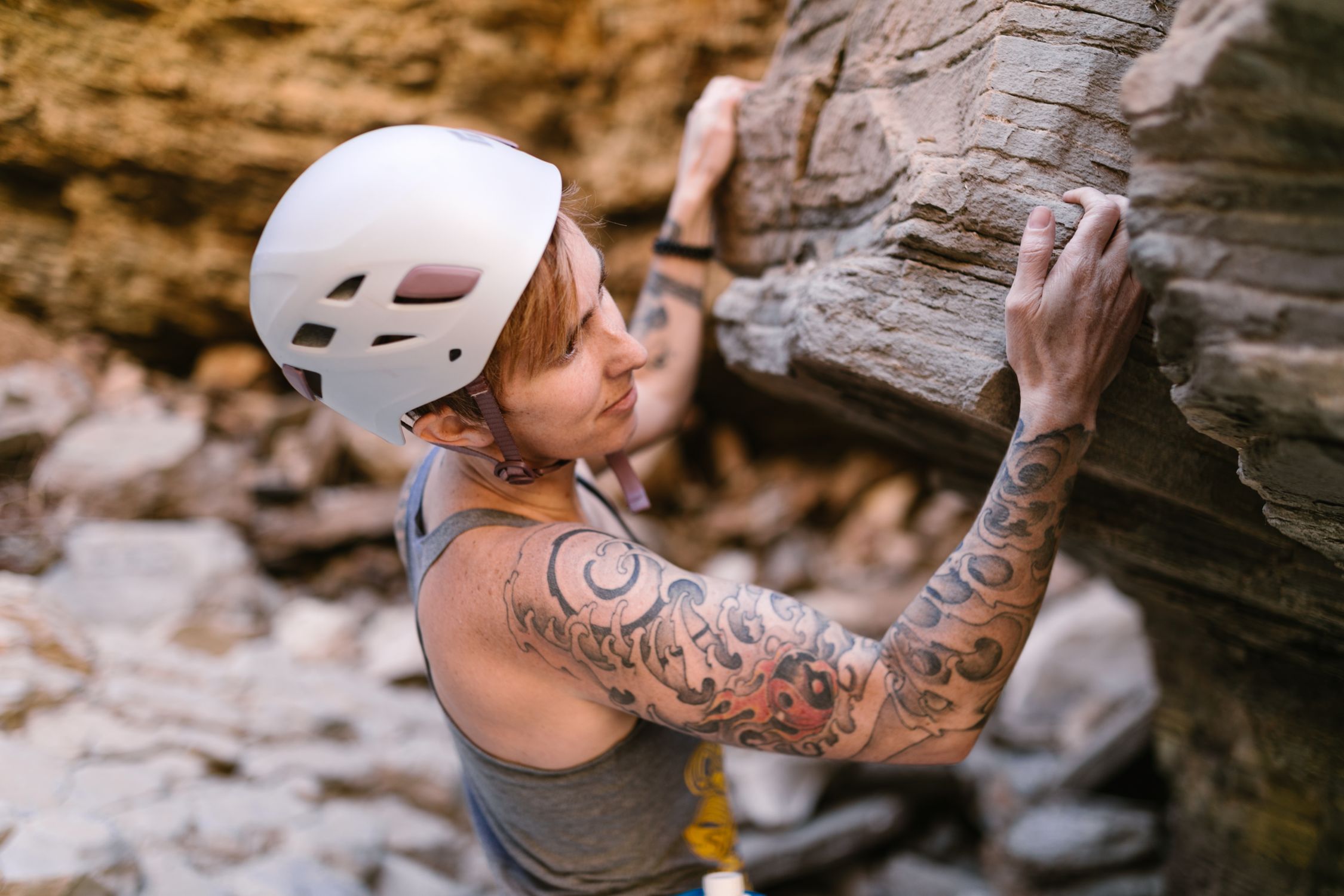
Petzl Boreo — Blue, S/M (48-58 cm)
- Amazon: Buy Petzl Boreo (ASIN B0BSBDZK44)
- Price: $55-$70
- Weight: 330 g
- Construction: Hybrid ABS shell with EPP + EPS dual foam liner (TOP and SIDE PROTECTION certified)
- Ventilation: Limited; designed for durability over airflow
- Size: 48-58 cm (S/M)
- Best For: Beginner trad climbers and guiding clients who need bombproof durability over ultralight performance
- Pros:
- Thickest ABS shell in the lineup shrugs off abuse from gym use through multipitch guiding days
- Dual EPP + EPS foam liner provides top and lateral impact absorption beyond baseline standard
- Most affordable entry point for a dual-certified trad-capable helmet
- Adjustable lateral webbing and chin strap fit a wide range of head circumferences
- Cons:
- At 330 g it is the heaviest helmet in this roundup, noticeable on routes over 10 pitches
- Limited ventilation vs. foam-dominant competitors on hot summer days

How to Choose the Right Helmet for Your Next Trad Project
- Define Your Route Profile — Long alpine trad routes (over 8 pitches) demand low weight and extended rear coverage; big-wall routes with high fall potential benefit from MIPS.
- Assess Climate — If you regularly climb in heat, prioritize ventilation (Vapor, Sirocco). For cooler alpine days, ventilation matters less than durability.
- Fit the Head Shape — Oval heads gravitate toward the Vapor’s side openings; round heads may prefer the deeper-cut Sirocco or Wall Rider. The Boreo’s adjustable webbing offers the widest tolerance.
- Budget vs. Safety — The Zodiac and Boreo deliver solid protection under $100, while the Sirocco and Wall Rider MIPS justify higher price tags with cutting-edge tech and weight savings.
- Multi-Season Use — If you ski-tour in winter, the Meteor’s goggle-compatible shell eliminates the need for a second helmet.
The Bigger Picture: Trad Climbing’s Rise in 2026
Rock climbing participation in the United States has surged 30% since 2019, with first-time climbers now representing 40% of new entrants (Outdoor Industry Association 2025). Over 900 climbing gyms across the country feed a pipeline of trad-ready athletes, while youth participation has doubled since sport climbing entered the Olympics in 2021. This boom fuels a climbing helmet market projected to grow 10-12% annually through 2027, driven by expanding outdoor recreation and a heightened safety culture. As more climbers transition from gym walls to multi-pitch crags, the demand for helmets that blend ultralight performance with robust protection — like the Sirocco, Vapor, and Wall Rider MIPS — will only intensify.
Choosing the right helmet is a personal decision, but the data above provides a clear framework. Whether you chase the lightest gram count, need the rotational safety of MIPS, or require a rugged workhorse for guiding, the options listed here cover the full spectrum of trad and multipitch needs in 2026.
Related Reading
Get price-drop alerts and new guides from BoldTripGuide
One email a week: price drops on the gear we recommend, new guides, and what changed. No spam, unsubscribe anytime.